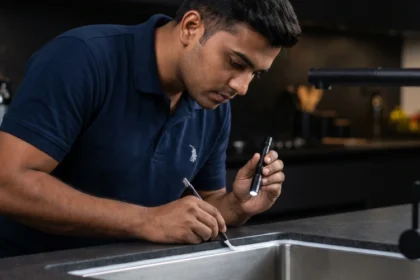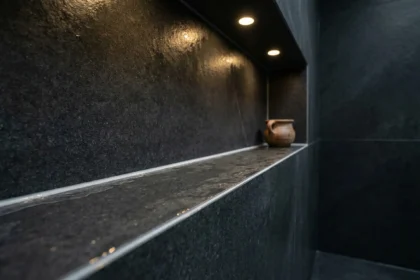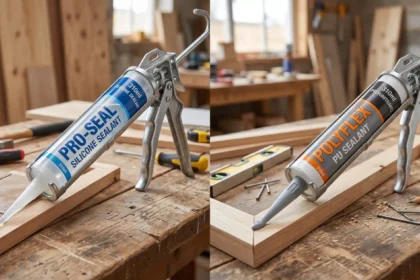






Rohit had just renovated his Mumbai apartment — new tiles, new fittings, the works. Twelve months later, he was back on the phone with a waterproofing contractor.
The culprit? A thin line of standard white caulk that had shrunk, yellowed, and cracked right along the base of his brand-new shower tray.
Sound familiar?
Across India’s residential and commercial properties, the same story plays out every monsoon season. A seal that looked fine in March has opened up by July, and now the water is behind the tiles.
The fix is not a new contractor. The fix is a better material — and increasingly, smart property owners are specifying it by name before the work even begins.
“I used to ask ‘who do I call for caulking?’ Now I ask ‘do you work exclusively with silicone?’ That one question changed everything.”
So what exactly is wrong with regular caulk?
Nothing — for the right job.
Acrylic caulk paints over easily, dries quickly, and costs less per tube. But it has a fundamental weakness: it does not flex.
And buildings move. Plumbing vibrates. Windows expand in summer heat and contract in winter nights. Every time that movement happens, a rigid caulk seal develops micro-cracks. Water finds micro-cracks extremely agreeable.
Here is where the science matters for property owners.
Silicone is elastomeric — it stretches up to 50% beyond its original length and returns to its original form without losing adhesion.
Traditional acrylic caulk has virtually zero elasticity. Once it shrinks past its bond point, it is done.
What does a silicone specialist actually do differently?
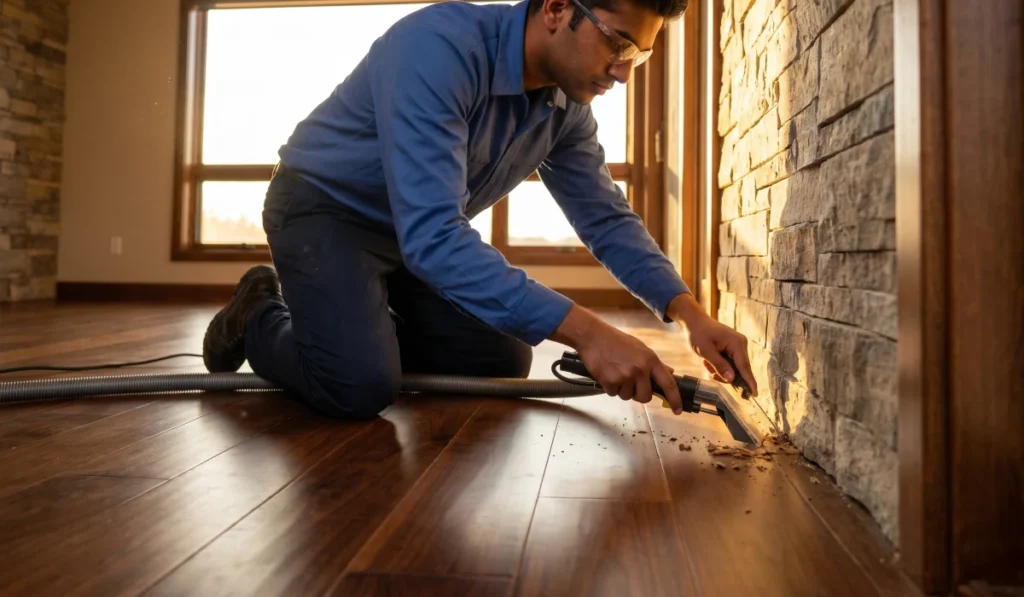
Most property owners assume sealing is sealing — a line of product applied to a joint.
In reality, professional silicone sealant contractors bring a process that changes results entirely. The difference is in surface preparation, joint sizing, backer rod installation, tooling technique, and product selection by substrate.
A qualified silicone specialist will:
Why silicone caulking services are a category — not a commodity
Here is something most property owners do not know: the silicone product is only half the equation.
The method of application accounts for the other half of long-term performance. This is why professional silicone caulking services deliver results that DIY application or general painting contractors cannot match.
The critical steps most contractors skip include complete removal of the old sealant (applying over a failed joint locks in the failure), priming of porous or non-stick substrates, correct backer rod sizing to achieve the right joint depth-to-width ratio, and proper tooling technique.
A flat or convex bead holds standing water; a tooled concave profile sheds it. These are trade skills, not common knowledge.
The true cost of silicone vs Acrylic/Latex caulk — calculate yours
The true cost of silicone vs caulk — calculate yours
Adjust the fields below to match your property and see total cost over 10 years
Myth buster — what property owners get wrong
Structural silicone glazing — when the stakes are highest
If your building has a glass curtain wall, ribbon windows, structural glazing fins, or any all-glass facade element, the silicone is not decorative.
Structural silicone glazing systems are engineered bonds — the silicone carries the dead weight of the glass panel and resists lateral wind loads simultaneously.
The design bite dimension, the silicone modulus, and the cure width are all calculated values from the facade engineer’s specification.
Commercial window seal repair on structural glazing systems requires a completely different approach from residential window sealing.
The failed material must be tested, the glass re-supported during removal and application, and the new silicone system cured and inspected before glass loads are transferred back.
General silicone sealant contractors without structural glazing experience should not be attempting this category of work.
Building owners who specify a qualified silicone specialist for their facade from day one — and who schedule periodic inspection and re-caulking of perimeter joints every 10–15 years — avoid facade remediation projects that routinely run into crores on large commercial buildings.
Note
Structural silicone glazing is load-bearing. It keeps your glass panels attached to the building. The specification and application have to be exact.
The lifespan reality: silicone vs caulk over time
Estimated functional seal integrity over years (0 = failed, 100 = full integrity)
What to look for when hiring — your property inspection checklist
Pre-hire qualification checklist
Tick each box as you verify with your contractor before hiring
Frequently asked questions
Ready to get it done right the first time?
Silicone Crew operates across Delhi, Gurugram, Noida, Mumbai, Bengaluru, Hyderabad, Faridabad, and Ahmedabad. Residential and commercial projects.
Free Quote Our Services