

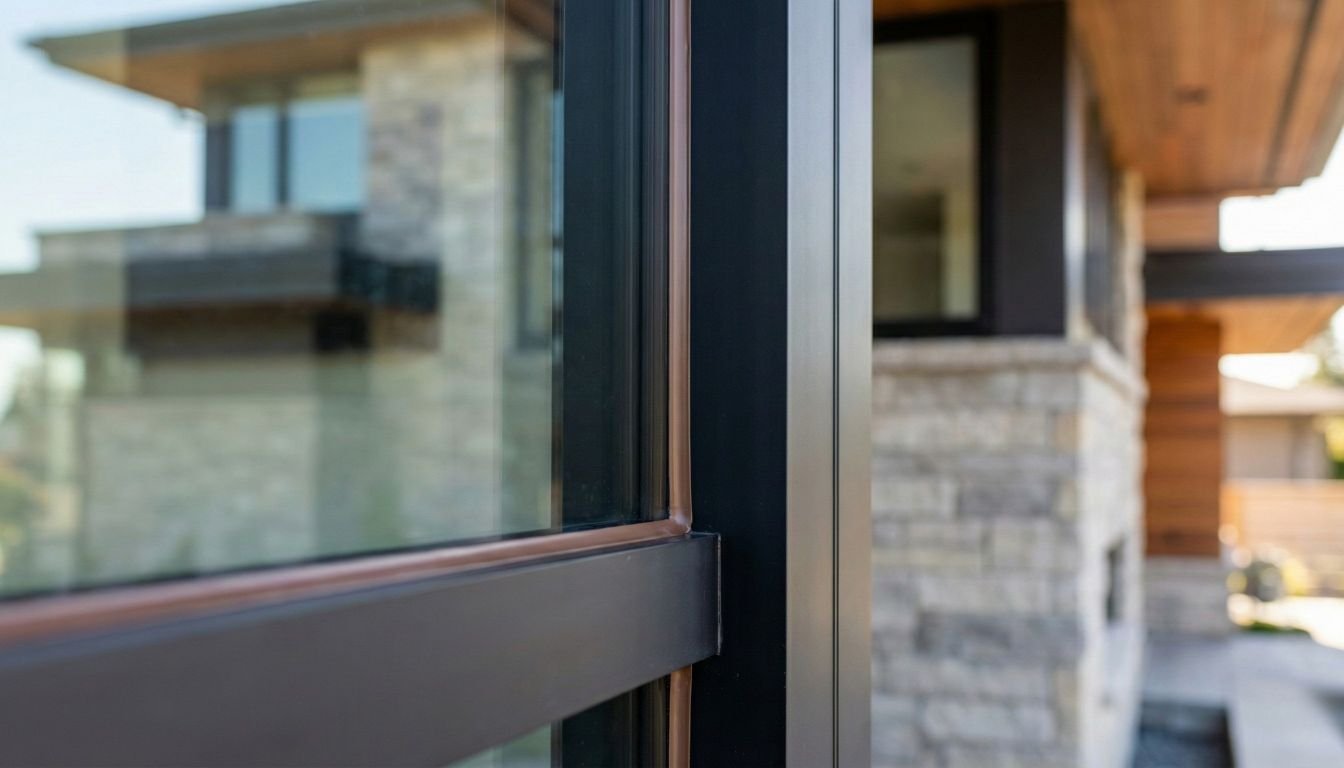
It’s 6 AM on a Tuesday in DLF Phase 3, and Meenakshi is wiping down her living room windowsill for the second time this week.
The fine grey dust that settles over Gurugram overnight has found its way in again — not through an open window, but through a hairline gap along the frame that nobody notices until they run a finger along it.
Three floors up, in a Golf Course Road high-rise, a facility manager is staring at a water stain spreading across a false ceiling, right below where the glass curtain wall meets the slab. It rained for less than an hour the night before. That’s all it took.
If you live or work in Gurugram, you already know these two scenes.
This is a city built almost entirely in the last twenty-five years, wrapped in glass, ACP panelling, and aluminium framing, sitting on a stretch of land where summer highs regularly cross 45°C and winter air quality regularly falls into the “very poor” to “severe” band on the national AQI scale.
The one thing standing between all that glass and steel and the weather outside is a bead of silicone sealant, usually no wider than your thumb.
When it fails — and in Gurugram, it fails faster than most people expect — dust gets in, water gets in, and money starts leaking out in the form of repairs, mould removal, and damaged interiors.
This is exactly why finding reliable window sealing contractors has become such a common search for homeowners and facility managers across the city.
Not because window sealing is glamorous work, but because it’s the quiet, unglamorous fix that prevents a hundred bigger problems.
Why Gurugram’s Climate Is Genuinely Harder on Silicone
Most silicone sealant sold in India was never designed with Gurugram’s climate in mind. The numbers explain why this city is such a punishing test for a material that, elsewhere, might last two decades without complaint.
35°C+
annual temperature swing between summer highs above 45°C and winter nights near freezing, driving daily joint expansion and contraction
250+ µg/m³
winter PM2.5 levels recorded on several days each season — fine dust that settles directly into window and facade joints
902.6 mm
rainfall recorded across the June–September 2025 monsoon, against a normal of 640.4 mm — an “excess” season by IMD’s own classification
180–250 mm
rainfall recorded in isolated Delhi-NCR pockets within a single day during peak monsoon spells in July 2026
Sources: India Meteorological Department seasonal reports; regional air quality monitoring data, 2025–2026.
Because of how wind moves around clusters of high-rises, monsoon rain in Gurugram rarely falls straight down.
It gets pushed sideways into facade joints, window frames, and balcony seals — which is why leaks often appear on walls that never see direct rainfall.
Put these factors together and you get a city where silicone doesn’t get twenty years of life the way it might in a milder climate.
Industry data on UV-exposed sealants backs this up: without proper UV stabilisers, exterior silicone can start chalking and cracking within five to ten years instead of the twenty-to-thirty-year lifespan it’s rated for — and Gurugram’s combination of heat, dust, and monsoon stress tends to sit at the harsher end of that range.
The Real-World Signs That Your Windows or Facade Are Already Failing
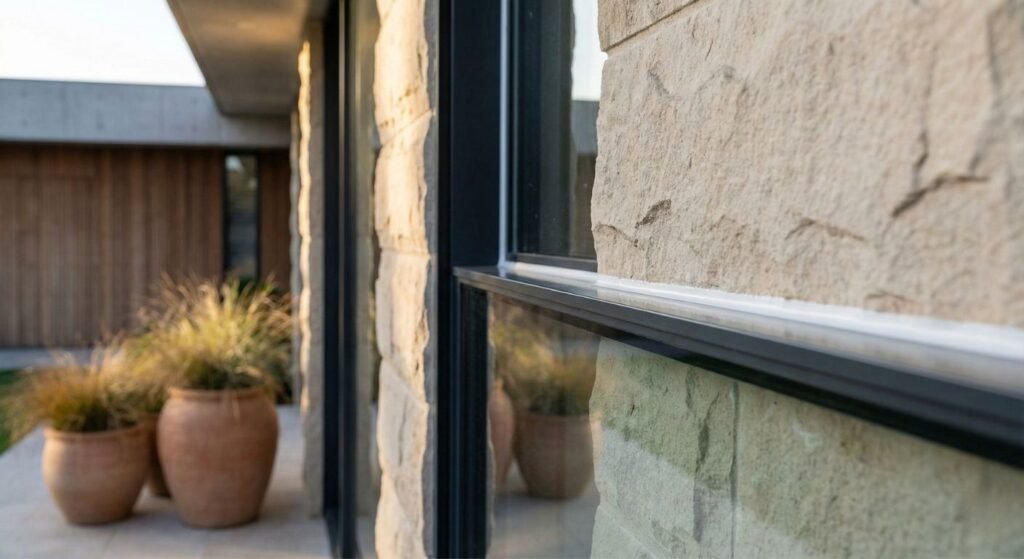
Most residents don’t call anyone until there’s an obvious problem — usually water on the floor or a musty smell in the bedroom. But sealant failure gives warning signs long before that, if you know where to look.
Inside the home
- A thin line of dust building up on the inner windowsill even with the window shut
- A faint whistling sound when it’s windy outside — air moving through a gap that shouldn’t exist
- Condensation collecting between the glass and frame after a cold night
- A yellowish, brittle appearance to the silicone bead along window edges
On facade and commercial building
None of these signs are dramatic on their own. That’s the trap.
People wait for the leak, and by then the damage extends beyond the window itself — into gypsum ceilings, wooden flooring, electrical points, and sometimes structural corrosion in the frame anchors.
Catching these early signs is usually all it takes to turn a call to window sealing contractors into a quick, inexpensive fix rather than a full restoration project.
Why This Isn’t a Job for the Neighbourhood Handyman
Here’s something worth saying plainly:
silicone application looks deceptively easy. Anyone can buy a tube from a hardware store, load it into a gun, and run a bead along a window frame.
It takes maybe two minutes to look “done.” The trouble is that looking done and actually sealing a joint properly are two very different outcomes, and the gap between them only shows up months later, usually during the first heavy monsoon spell.
Proper surface preparation is the part almost everyone skips. Old, failed silicone has to be completely scraped out — not just covered over — because fresh sealant will not bond to old, cured silicone or to dust and grease left on the surface.
The joint then needs to be cleaned, sometimes with a solvent, and fully dried before any new material goes in. Skip this step, and even the best silicone in the world will peel away within a season.
Then there’s the question of which silicone to use. Neutral cure, acetoxy, structural grade, weatherproofing grade — these aren’t interchangeable, and using the wrong one is one of the most common mistakes made by untrained labour.
Acetoxy silicone, for instance, releases acetic acid as it cures, which can corrode aluminium frames and certain metal fittings over time if used where it shouldn’t be. On glass facades and structural glazing, the wrong product choice can genuinely compromise the safety of the installation, not just its appearance.
This is where experienced window sealing contractors earn their fee. It isn’t the silicone itself that costs money — a tube costs a few hundred rupees.
It’s the judgement about what grade to use where, the discipline to remove every trace of old material, and the technique to apply a clean, even bead that cures without air pockets or gaps.
Reputable window sealing contractors treat surface prep and product selection as the actual job, with the application itself being the easy last step.
Facade Sealing: A Different League of Precision
Residential window sealing and full facade sealing are related, but the second one comes with much higher stakes.
A glass curtain wall on a fifteen-storey tower isn’t just decorative — in many cases the silicone joint is doing structural work, holding glass panels to the frame while allowing enough flexibility for the building to expand, contract, and even sway slightly in strong wind without the glass cracking or popping loose.
Facade sealing failures in Gurugram tend to follow a predictable pattern. A building goes up, the developer’s contractor does the initial glazing work under time pressure, and within five to seven years the silicone joints along south- and west-facing elevations — the ones that take the harshest sun — start to show UV degradation first.
Cracks appear at the corners of glass panels, where movement stress concentrates.
Left unaddressed, this becomes a genuine safety concern, not just an aesthetic one, because a compromised structural joint on a high floor is not something you want to discover during a storm.
Preventive Instinct
Silicone Crew, a Gurugram-based silicone application specialist that has worked on facade and window resealing projects from DLF Phase 1 to Golf Course Extension, notes that the most common call they get isn’t from a building that’s leaking badly — it’s from one where a resident or facility manager finally noticed a hairline crack and decided not to wait for the next monsoon to find out what happens next.
That instinct, acting before the visible failure, is usually what separates a manageable repair from a much larger one.
This is precisely why commercial properties — IT parks, hotels, hospitals, malls, office towers along Golf Course Road, Golf Course Extension, and SPR — need window sealing contractors who understand the difference between a bathroom joint and a structural glazing joint.
The tools, the access equipment (often rope access or scaffolding for taller buildings), the safety protocols, and the technical knowledge required are simply not comparable to a home repair job.
A facility manager overseeing a thirty-storey building has very different needs from a homeowner in a low-rise society, and the right contractor should be able to move fluidly between both without cutting corners on either.
Dust-Proof Interiors: The Bathroom and Kitchen Side of the Story
Facades get attention because leaks are dramatic. But inside the home, silicone failure shows up in quieter, more personal ways — and this is where bathroom sealant services and shower caulking come into the picture.
Anyone who has lived in Gurugram through a full monsoon knows the particular smell of a bathroom corner gone bad. It usually starts at the base of the shower enclosure or around the bathtub edge, where water sits longest.
Once the silicone there cracks or peels — often because the original acetoxy-grade sealant was never meant for constant moisture exposure — water seeps behind tiles and into the substrate. What follows is black or pink mould growth, a musty smell that no amount of cleaning removes, and eventually tile debonding.
A proper shower caulking service follows a specific sequence, not a single step:
- Fully remove the contaminated old sealant, rather than layering new silicone over it
- Treat the area for existing fungal growth before resealing
- Let the surface dry completely — rushing this step is the most common reason repairs fail
- Apply an anti-fungal, sanitary-grade silicone rated for continuous water contact
- Allow a full curing period before the area is exposed to water again
Skipping step two is the single biggest reason bathroom sealant repair jobs fail within a few months — the mould was never gone, just sealed back in.
Kitchens face a milder version of the same issue around sinks and countertop joints, where grease and standing water break down ordinary sealant faster than in any other room.
And even bedrooms and living rooms aren’t immune — this is where window silicone sealing quietly does its job of keeping Gurugram’s dust out.
A door and window sealing service that also checks bathroom and kitchen joints during the same visit tends to be far better value than calling someone new for each area of the house.
What Good Window Sealing Contractors Actually Do, Step by Step
If you strip away the sales language, professional window sealing contractors follow a fairly consistent process, and knowing it helps you judge whether the person quoting you a price is cutting corners.
Contractors who skip straight from “clean the frame a bit” to “apply silicone” are the ones whose work you’ll be redoing within a year. It’s a short list, but almost every failure traces back to one of these steps being rushed.
Choosing the Right Window Sealing Contractors in Gurugram
Given how many people advertise “silicone work” in Gurugram — often as a side offering alongside painting or general handyman services — it helps to know what actually separates serious window sealing contractors from someone winging it with a caulking gun. Before you hire, it’s worth asking:
- What brand and grade of silicone will be used, and does it change based on surface type?
- How is old sealant removed — scraping and solvent cleaning, or just applying over the top?
- For facade or high-rise work, what access method and safety certification does the crew hold?
- Is there a written warranty, and what does it actually cover?
- Can they show past work on a similar surface — glass, ACP, stone, or uPVC?
A contractor who gives specific, confident answers to these questions — not just “premium silicone” — usually knows the trade properly. Reputable window sealing contractors will stand behind their work for a defined period, because they know a properly done joint shouldn’t fail early — and if it does, it’s their material or technique at fault, not the weather.
Price matters, of course, but the cheapest quote in this line of work is rarely the best value.
A joint resealed poorly for a lower price often needs to be redone within a year, at which point you’ve paid twice for something that should have been a five-year fix the first time.
Good window sealing contractors price for the labour of doing it properly — removal, cleaning, correct product, careful application — not just for a tube of silicone and twenty minutes of someone’s time.
The Cost of Waiting
There’s a quiet, compounding cost to ignoring small sealant problems. A tiny gap that lets in dust today becomes a mould patch behind the wall in eight months. A hairline crack in a facade joint that seems purely cosmetic today becomes a structural repair — with scaffolding, access equipment, and far higher costs — in three years.
Window frame seal repair caught early is a same-day, low-cost fix. Left unattended, it turns into repainting, replastering, sometimes even replacing damaged wooden flooring or electrical fittings that got wet.
This is true whether you own a single apartment in Sector 56 or manage a commercial tower on Golf Course Extension.
The joints are small, but what they protect isn’t. For commercial window seal repair especially, the cost of a leak reaching server rooms, retail inventory, or hotel guest rooms dwarfs the cost of the repair itself many times over.
A City That Deserves Better Seals
Gurugram didn’t grow slowly. It went from farmland to a glass-and-steel skyline in roughly two decades, and a lot of that construction happened at a pace that didn’t always leave room for meticulous finishing work.
Silicone sealing was often treated as a final, minor task rather than the protective layer it actually is. The result is a city full of buildings — homes, offices, hotels, malls — that are structurally sound but quietly vulnerable at the joints.
The fix isn’t complicated. It’s careful surface preparation, the right silicone for the right surface, proper technique, and a bit of patience during curing.
What’s needed is simply someone who treats that two-minute-looking job with the seriousness it deserves — the kind of seriousness that separates trained window sealing contractors from a quick weekend fix.
Whether it’s a single bathroom corner that keeps growing mould every monsoon, a set of windows letting in dust every morning, or an entire glass facade on a commercial tower that needs re-sealing after a decade of Gurugram’s weather, the difference between a five-year fix and a five-month failure almost always comes down to who’s holding the caulking gun — and whether they were trained to use it properly.
Flawless glass facades and genuinely dust-proof interiors aren’t a luxury upgrade for Gurugram’s buildings. Given the climate this city sits in, they’re closer to basic maintenance.
The sooner that gets treated as a normal, recurring part of owning or managing property here, the fewer 6 AM windowsill dust-wipes and monsoon-night ceiling stains anyone will have to deal with.